The bullet heaven genre has been chasing the high of Vampire Survivors and Brotato for years, but Dark Jay Studio’s Arms of God—which dropped into Steam Early Access in June 2026—finally brings some much-needed heavy metal brutality to the formula. Stripping away the pixel art in favor of a gritty, isometric Doom-inspired hellscape, the game tasks you with wielding five weapons simultaneously against giant demonic hordes. But underneath the blood-soaked arenas and shredding guitar riffs lies one of the most mathematically dense meta-progression systems in the autoshooter space.
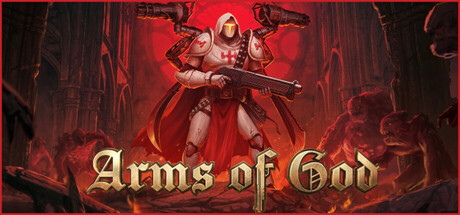
You aren't just picking up random wands and hoping for the best; you are managing a 12-slot attachment inventory, manipulating the map's "Crux" zone for stat multipliers, and banishing unwanted drops via Edicts. Surviving Nightmare Act 3 requires more than fast reflexes. It demands a flawless build. This guide breaks down the optimal setups, the class archetypes, and the absolute best builds to delete the screen in seconds.
The Heavy Metal Metagame
At its core, Arms of God is an economy simulator disguised as a gory arena shooter. The game allows you to wield up to five weapons at once, and the sheer volume of customization is staggering. Every firearm or melee tool can be merged up to Tier 3, provided you find three identical copies in your level-up rewards. But the real depth comes from the modular attachment system.
Unlike its predecessors that rely on passive stat sticks, this game forces you to physically slot modifiers—like explosion chance, piercing rounds, or holy damage scaling—directly onto your gear via a 12-slot grid. If you fail to synergize your attachments with your class's innate passives, your run will end abruptly at the hands of the first major boss. The learning curve is steep, and the game does not hold your hand when it comes to the underlying math. You either understand how to multiply your base damage through careful inventory management, or you get swarmed by the demonic horde.
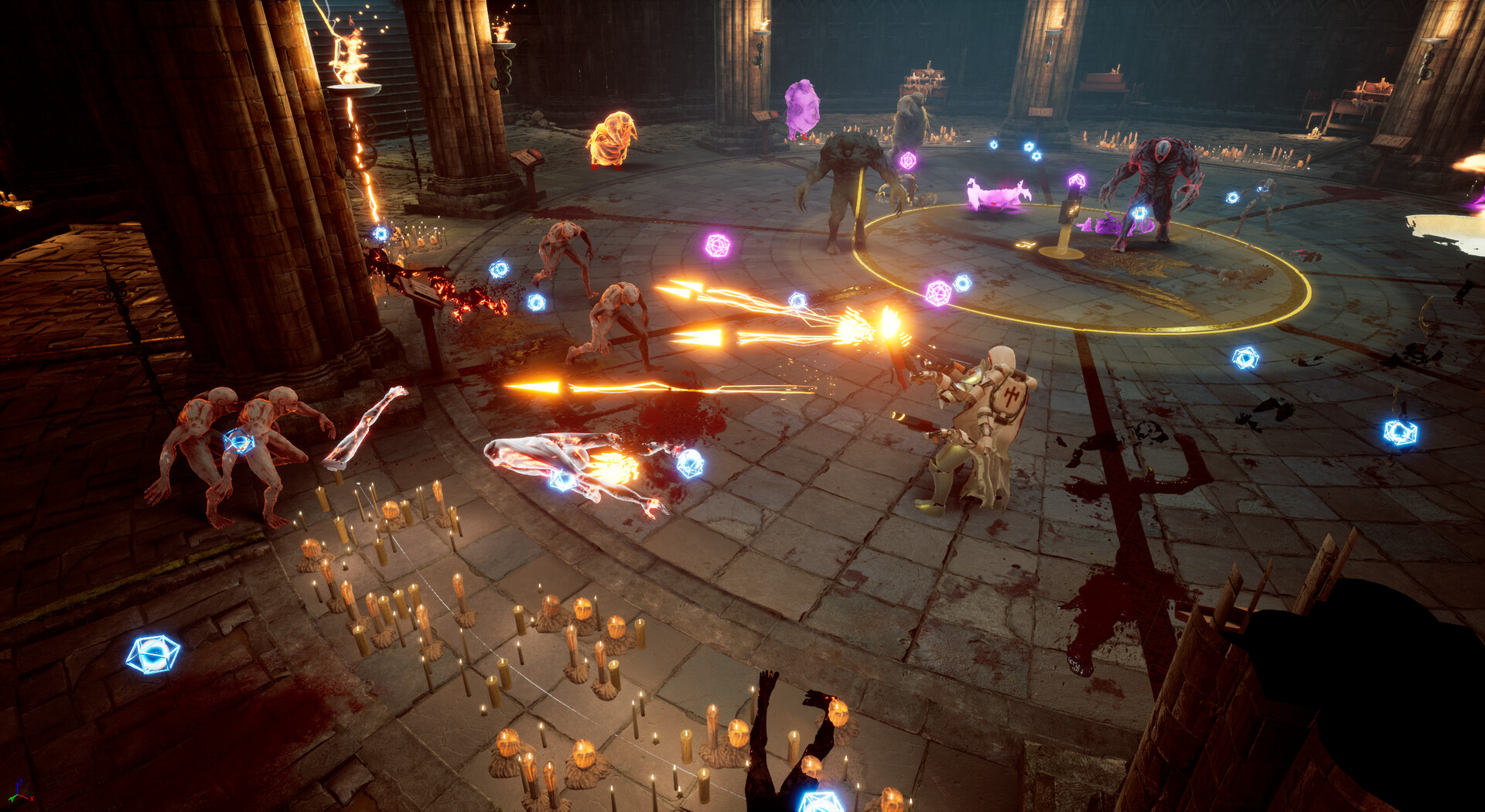
Furthermore, the game’s pacing is relentless. The transition from Act 1 to Nightmare Act 4 introduces enemy types with massive health pools and overlapping area-of-effect attacks. To keep up, you must constantly be merging weapons, securing Edicts to banish trash items, and optimizing your five-weapon loadout to handle both single-target bosses and massive swarms.
Arms of God Class Guide: Who to Main
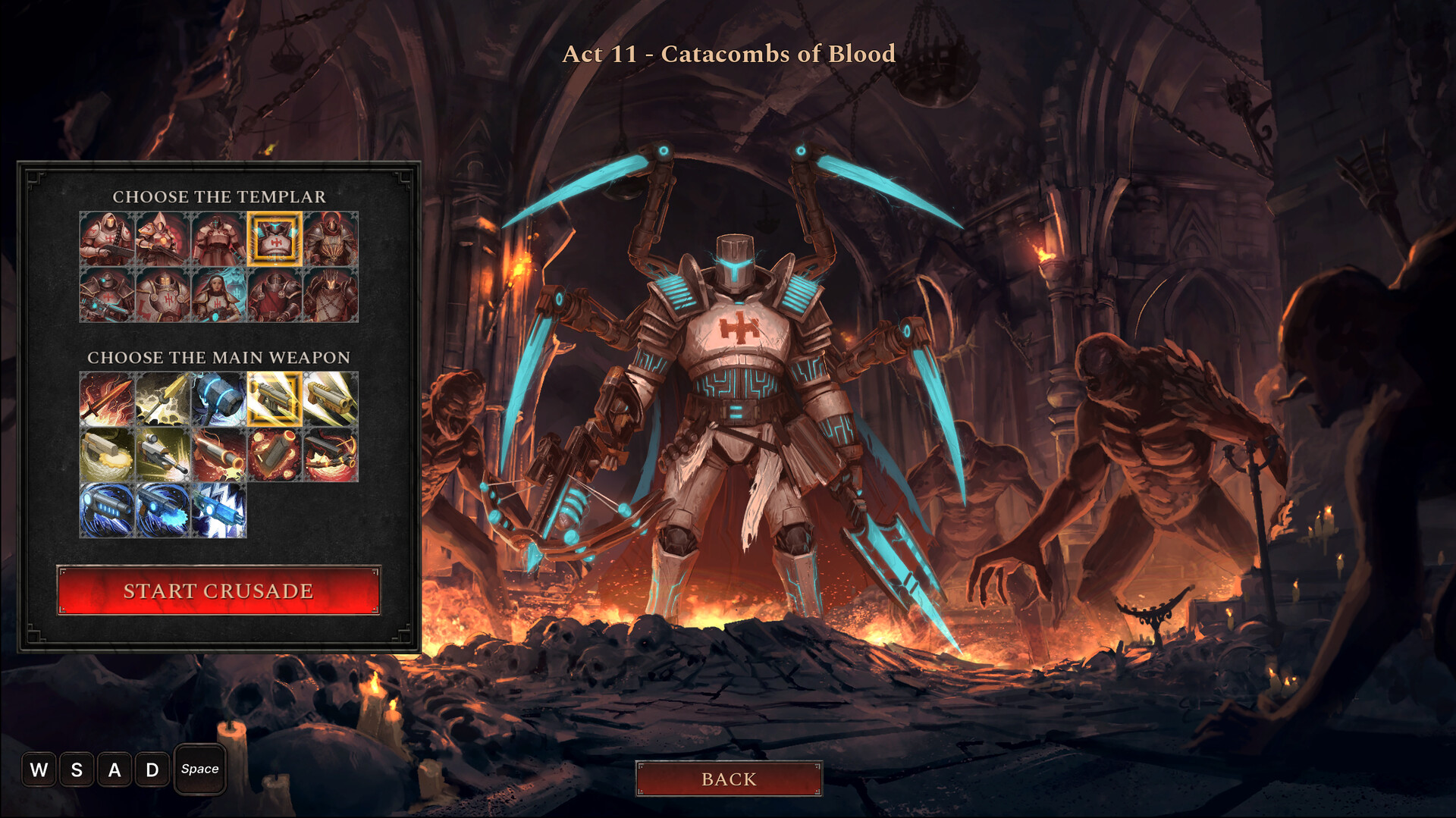
The 10 available characters in Early Access aren't just cosmetic swaps; they dictate your entire approach to the demonic onslaught. Choosing the right class is the difference between a frustrating wipe and a glorious, screen-melting victory.
The Silent Sister is the undisputed queen of the current meta. Her innate massive attack speed boost turns slow, heavy-hitting weapons into rapid-fire death machines. When you pair her with piercing firearms like the Magnum or the Blaster, she can clear lanes faster than the spawn director can fill them. She is fragile, but her sheer offensive output acts as its own defense.
The Crusader offers a more forgiving, tank-oriented playstyle. Built around Holy Defense, this class scales brilliantly with defensive attachments and melee weapons. While he struggles slightly with the raw DPS checks in the late game, his survivability makes him the perfect choice for learning the map layouts, boss patterns, and resource management.
The Lightning Paladin (and his variant, the Lightning Knight) is the premier choice for area-of-effect clearing. Relying heavily on Electric Synergy, this class excels when wielding Electric Hammers and synergizing with chain-lightning attachments. He requires a bit of ramp-up time to get his 12-slot grid fully operational, but once fully online, he turns the arena into a localized thunderstorm that vaporizes trash mobs instantly.
The Nightmare Difficulty Tier List
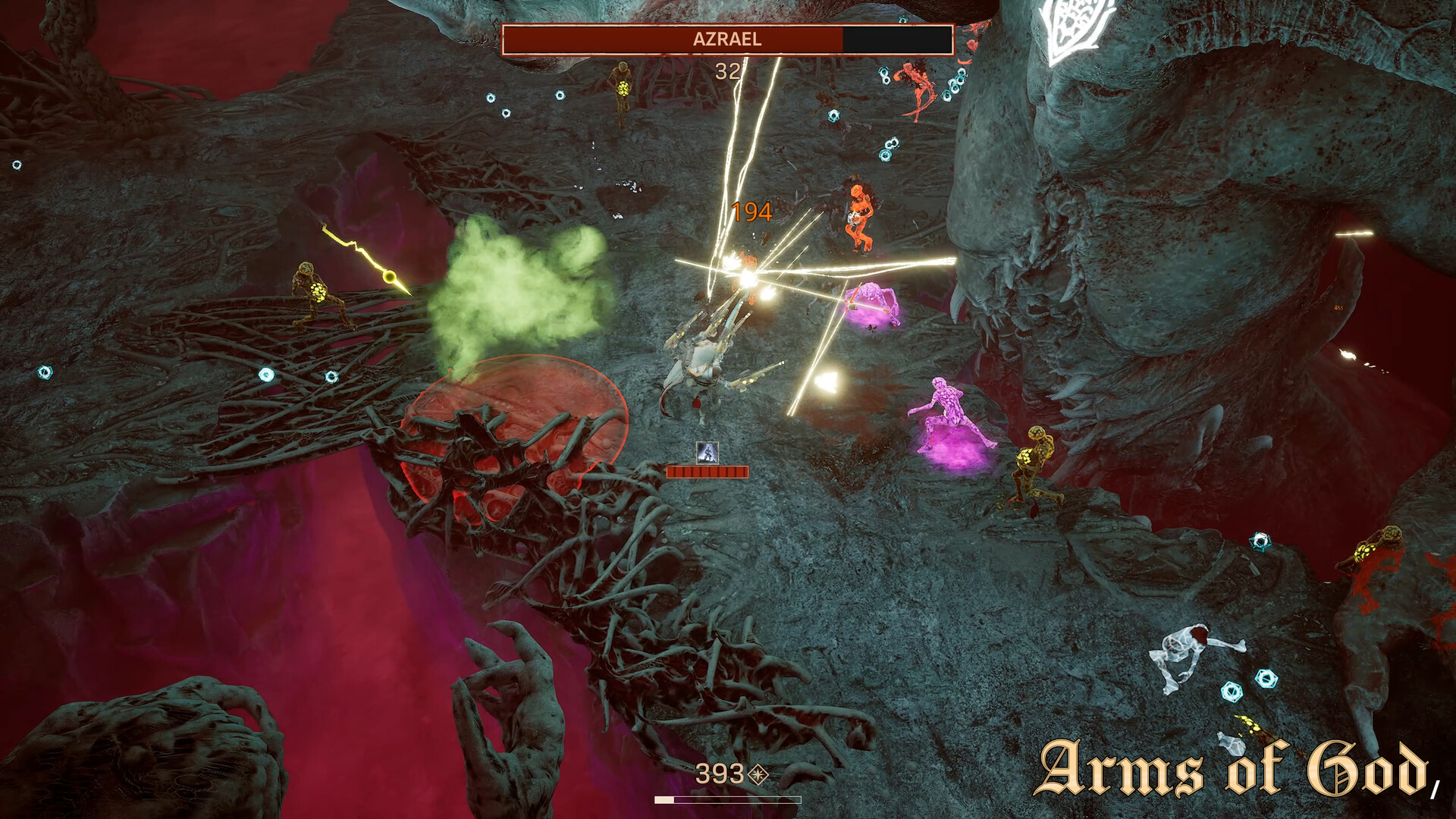
When you push into the higher difficulty tiers, particularly Nightmare Act 3 and Act 4, the viability of certain setups drops off a cliff. You need builds that can output millions of damage points per second while keeping the encroaching horde at a safe distance. Here is how the meta shakes out.
S-Tier (Godslayer)
- The 54-Attachment Flare Field: An absolute cheat code of a build. By exploiting specific character passives that allow attachment stacking, you can load up a staggering 54 modifiers onto a single weapon. Paired with the Flare Field, this setup jacks up your explosion chance and range until the entire screen is covered in fire. It melts the final boss so fast you won't even have to move.
- Silent Sister Blaster: Utilizing the Tier 2 Blaster or Magnum, this build relies on the Silent Sister’s raw attack speed. By slotting piercing attachments into the 12-slot grid, every shot travels through multiple giant demons. It is mathematically the highest consistent single-target DPS in the game.

A-Tier (Demonic Purge)
- 30 Holy Spears: A visually spectacular setup where you flood the screen with divine projectiles. It was slightly nerfed in a recent hotfix but remains incredibly potent for clearing trash mobs, even if it bogs down slightly against high-health single targets like the Lord of Hell.
- The Gatling Gun Overdrive: Going all-in on the Gatling Gun requires heavy investment in recoil reduction and magazine size, but the payoff is a sustained hose of lead that easily handles mid-tier elites.
- Sniper / Machine Gun Hybrid: A highly versatile build that uses the Sniper Rifle to pick off high-threat targets while the Machine Gun provides a steady perimeter defense.
B-Tier (Mortal Struggle)
- Basic Melee Tank: Relying purely on health regeneration and close-quarters weapons is a death sentence on Nightmare difficulty. The incoming damage scaling simply outpaces any armor or healing you can stack, leaving you trapped inside a mob of giant demons.
Weapon Synergies and The Merge Mechanic
Understanding which weapons to combine is just as vital as choosing the right class. The Tier 3 merge mechanic is where Arms of God transforms from a simple shooter into a tactical powerhouse. When you merge three identical weapons, they don't just gain a stat bump; they often unlock a transformative passive ability.
For example, taking the standard Divine Spear to Tier 3 unlocks a holy nova effect on critical hits. When you wield five Tier 3 Divine Spears simultaneously, every critical strike triggers a cascading wave of holy damage that can wipe the screen. Similarly, the Explosive Kwipeck and Inferno Gilick (weapons highly praised by the community for their sheer area denial) become exponentially more dangerous when their Tier 3 blast radii overlap.
The strategy lies in knowing when to hold onto a Tier 1 weapon to fish for a merge, and when to abandon a weapon because the loot pool isn't cooperating. This is where your Edicts come into play. A top-tier player will use their early Edicts to banish weapons that don't fit their synergy plan, artificially shrinking the loot pool to guarantee those Tier 3 merges before the Act 3 difficulty spike hits.
Breaking the Game: The 54-Attachment Setup
If there is one build that defines the current Early Access meta of Arms of God, it is the 54-attachment explosion exploit. The game’s math engine currently allows for uncapped scaling if you manage to acquire the right sequence of upgrades early in a run.
By isolating the Flare Field as your primary damage source and aggressively banishing all other weapon drops, you force the loot pool to exclusively offer attachments. Once you cross the threshold of 30+ attachments, the game's explosion radius calculations begin to overlap. The result is a cascading chain reaction of fire that deals upwards of 100 million damage per run. You can quite literally stand still in the center of the arena while the game plays itself, reducing the Lords of Hell to ash before they even render on your screen. Dark Jay Studio will likely patch this interaction, but for now, it is the ultimate power fantasy and the easiest way to farm meta-progression currency.
Mastering the Crux and Edict Economy
None of these top-tier builds are possible if you do not understand the map mechanics. Arms of God introduces a spatial awareness mechanic known as the "Crux golden zone." Standing within this specific, shifting area of the map grants massive, compounding stat boosts. Ignoring the Crux means leaving thousands of free damage points on the table, which will inevitably lead to a failed run on Nightmare difficulty.
Furthermore, map navigation is tied directly to your meta-progression during a run. You must actively hunt down banners scattered across the hellscape. Securing these banners earns you Edicts, the game’s primary currency for manipulating the random number generator. Edicts allow you to banish trash items from the loot pool, ensuring that your level-up rewards are laser-focused on your specific build.
Merging weapons is equally critical. You must merge three identical weapons to reach Tier 3, which unlocks their ultimate innate passive. If you waste your Edicts early on rerolls instead of banishing, your loot pool will be too diluted to consistently find those crucial duplicate weapons. The economy of Arms of God is ruthless, rewarding players who plan their 12-slot grids from minute one and punishing those who just pick whatever looks cool.
The Verdict
Arms of God proves that there is still plenty of design space left in the bullet heaven genre. By marrying the aesthetic aggression of classic boomer shooters with the spreadsheet-level depth of a hardcore ARPG, Dark Jay Studio has crafted a violently addictive loop. Whether you are theorycrafting the perfect 12-slot weapon synergy or just watching a Lightning Paladin vaporize a screen of demons with Electric Hammers, the $11 price tag feels like a steal. The balance might be slightly broken at the top end, but in a game about delivering divine justice to hell, being overpowered is exactly the point.
Sources
- Arms of God Official Steam Page & Early Access Launch Trailers.
- YouTube community build guides (Gohjoe, RepulsiveRaccoon, Gaming With Jeff).
- Must Play Reviews: "The $11 Solo Project That Puts AAA Games to Shame".
- Rogueliker: "Arms of God adds an array of interesting ideas to the Brotato formula".