The release of Robert Eggers' 2024 film Nosferatu brought the ultimate gothic monster back into the cultural zeitgeist, painting the silver screen in shades of dread, desire, and decay. With Bill Skarsgård donning the rat-fanged, pestilent visage of Count Orlok and Lily-Rose Depp delivering a harrowing, physically exhausting performance as Ellen Hutter, audiences have been left with a lingering question: is there a female Nosferatu?
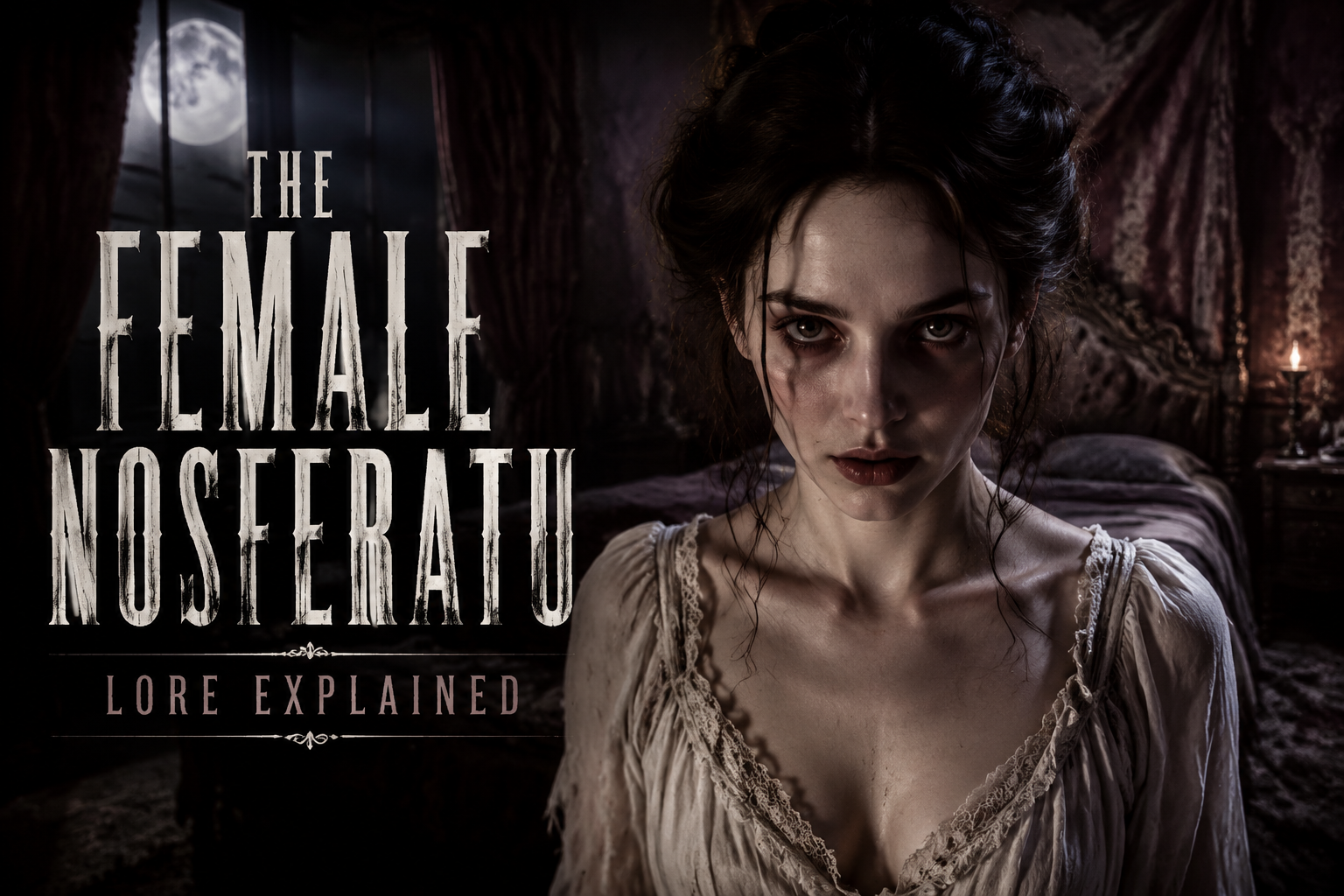
It’s a fascinating inquiry that strikes at the heart of how we consume horror. When we think of female vampires, pop culture usually serves up the seductive Brides of Dracula, the tragic heroines of Anne Rice novels, or the leather-clad underworld warriors of the early 2000s. But the "Nosferatu" archetype is fundamentally different. It is inherently grotesque, pestilent, and monstrous—an embodiment of plague rather than passion. Does a female equivalent exist in the 2024 film, or in the wider, blood-soaked tapestry of vampire mythos? To answer that, we have to dissect both the cinematic text and the decades of lore that built the modern vampire.
Ellen Hutter: The Monstrous Mirror in Eggers’ 2024 Film
In the 2024 film, there is no literal, rat-toothed female vampire stalking the cobblestone streets in a tailored coat. However, Robert Eggers crafts Ellen Hutter as something far more complex than a traditional damsel in distress. She is the psychological counterpart to Orlok—a monstrous mirror reflecting the vampire's ancient hunger. Throughout the film, Ellen experiences a terrifying psychological descent. She is plagued by dark visions and an inexplicable, erotic terror that binds her to the vampire across oceans and mountains.
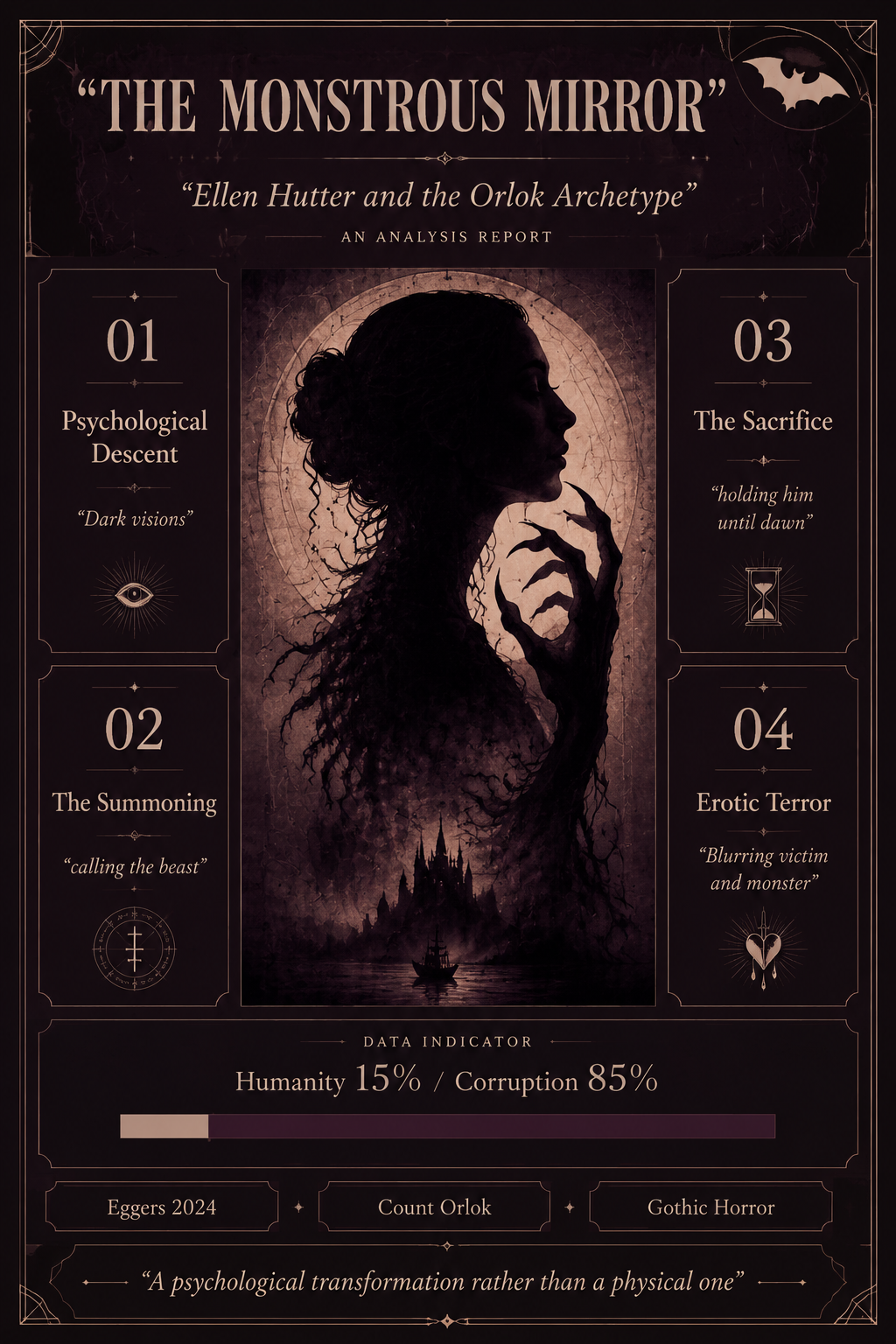
Eggers frames their connection as a twisted communion. Ellen is not merely hunted; she is actively participating in a summoning, calling the beast to her bedchamber. While her husband Thomas (Nicholas Hoult) plays the role of the bumbling, naive hero who fails to understand the true nature of the threat, Ellen sees the monster clearly. As Eggers himself has noted in interviews, Thomas thinks he is the hero, but it is Ellen—the woman everyone dismisses as hysterical—who actually solves the problem.
By the film's climax, the line between victim and monster blurs entirely. In a devastating act of erotic terror, Ellen offers herself to Orlok, holding him until dawn so that the sunlight can destroy him. Her willingness to embrace the grotesque, to let the plague wash over her, makes her the spiritual "female Nosferatu" of the narrative. It is a psychological transformation rather than a physical one. She absorbs the Orlok curse into her very soul, proving that the true horror of the vampire infects the mind just as much as the flesh.
The Tangled Etymology of "Nosferatu"
To understand if a female Nosferatu exists in the broader mythos, we must first look at what the word actually means. The roots of the undead in Romanian folklore are messy, and the word itself is a product of Victorian mistranslation. The term "Nosferatu" was introduced to western audiences through Bram Stoker's Dracula (1897). Stoker, researching in the British Library, believed it was an authentic Romanian word for "vampire." Modern linguists largely agree he stumbled upon a misunderstanding of the Romanian nesuferitu (meaning "the insufferable one" or "the offensive one") or perhaps a derivative of the Greek nosophoros (plague-bearer).
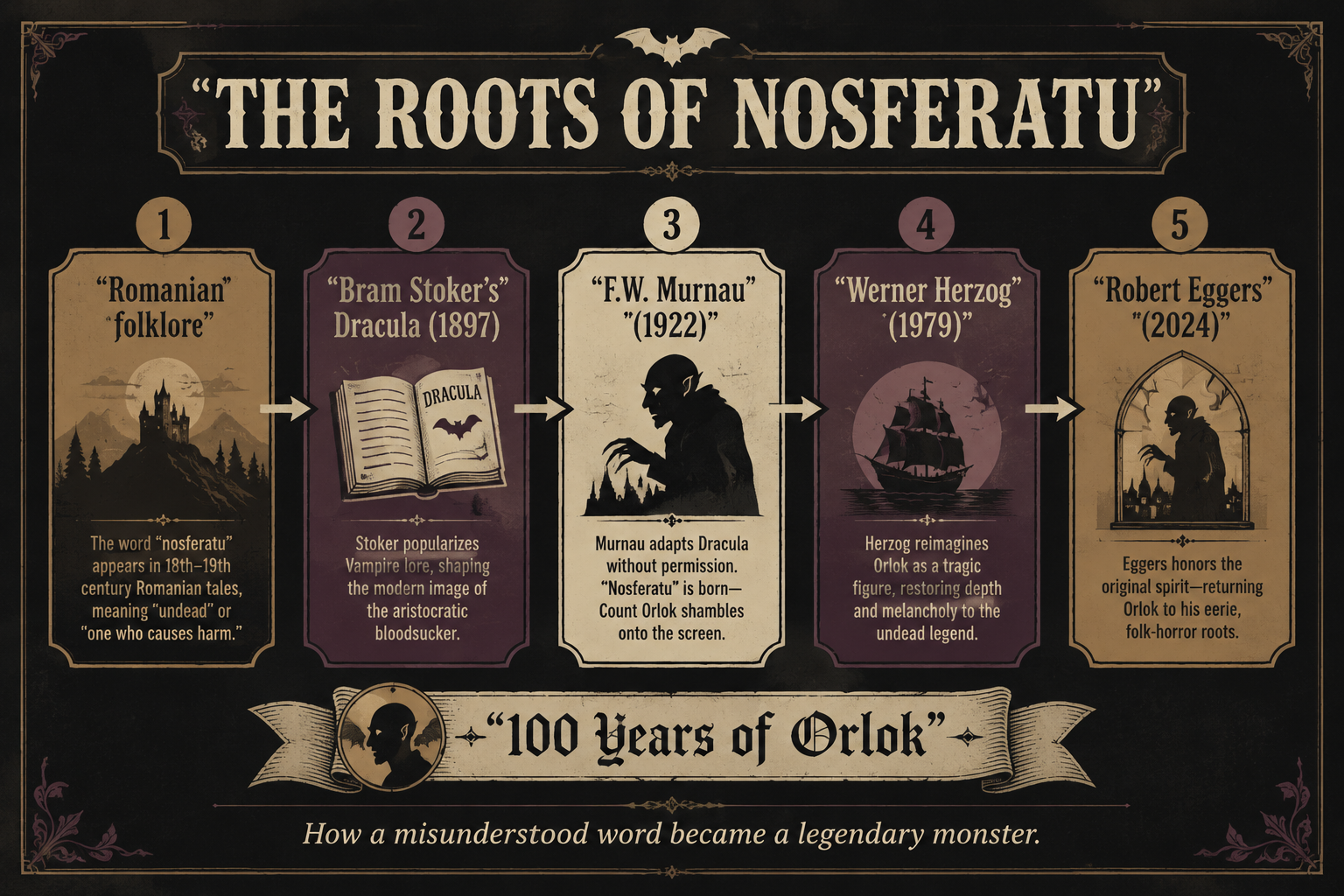
The word was then immortalized by F.W. Murnau (1922) in his unauthorized silent film adaptation, Nosferatu: A Symphony of Horror. Because Murnau couldn't secure the rights to Dracula from Florence Stoker (Bram's widow), he changed the names and leaned heavily into the "Nosferatu" label to dodge copyright infringement. Florence Stoker sued anyway and ordered all copies of the film destroyed, but a few prints survived, cementing the word in cinematic history. Later, Werner Herzog (1979) and Robert Eggers (2024) would carry this cinematic torch, elevating the copyright-dodge into a legendary sub-genre.
Because "Nosferatu" is essentially just a synonymous, culturally bastardized term for "vampire," any female vampire in the Stoker or Murnau lineage technically qualifies. The Brides of Dracula are, by definition, female Nosferatu. But in modern pop culture, the word has evolved. It no longer just means "vampire"—it designates a specific type of vampire. The Orlok archetype is bald, pale, rodent-like, and carries the plague. For a true female Nosferatu that fits this specific, hideous aesthetic, we have to turn to tabletop roleplaying lore.
The "Sewer Rats" of Vampire: The Masquerade
If you are looking for literal, monstrous female vampires that fit the Orlok description, you will find them thriving in the lore of Vampire: The Masquerade (VTM). In this seminal tabletop RPG universe, "Nosferatu" is the name of a specific vampire clan, and they are a far cry from the velvet-draped aristocrats of the Camarilla.
Unlike the glamorous Toreador or the corporate Ventrue, the Nosferatu wear their curse on the outside. The embrace—the act of turning a human into a vampire—is a violently agonizing process for this clan. The curse manifests as severe physical deformities. Over the course of weeks, their bodies twist, their skin turns to leathery hide, their spines hunch, and their teeth elongate into jagged, predatory fangs. Because they cannot walk among humans without breaching the laws of vampire society, they are known in the underground as the Sewer Rats.
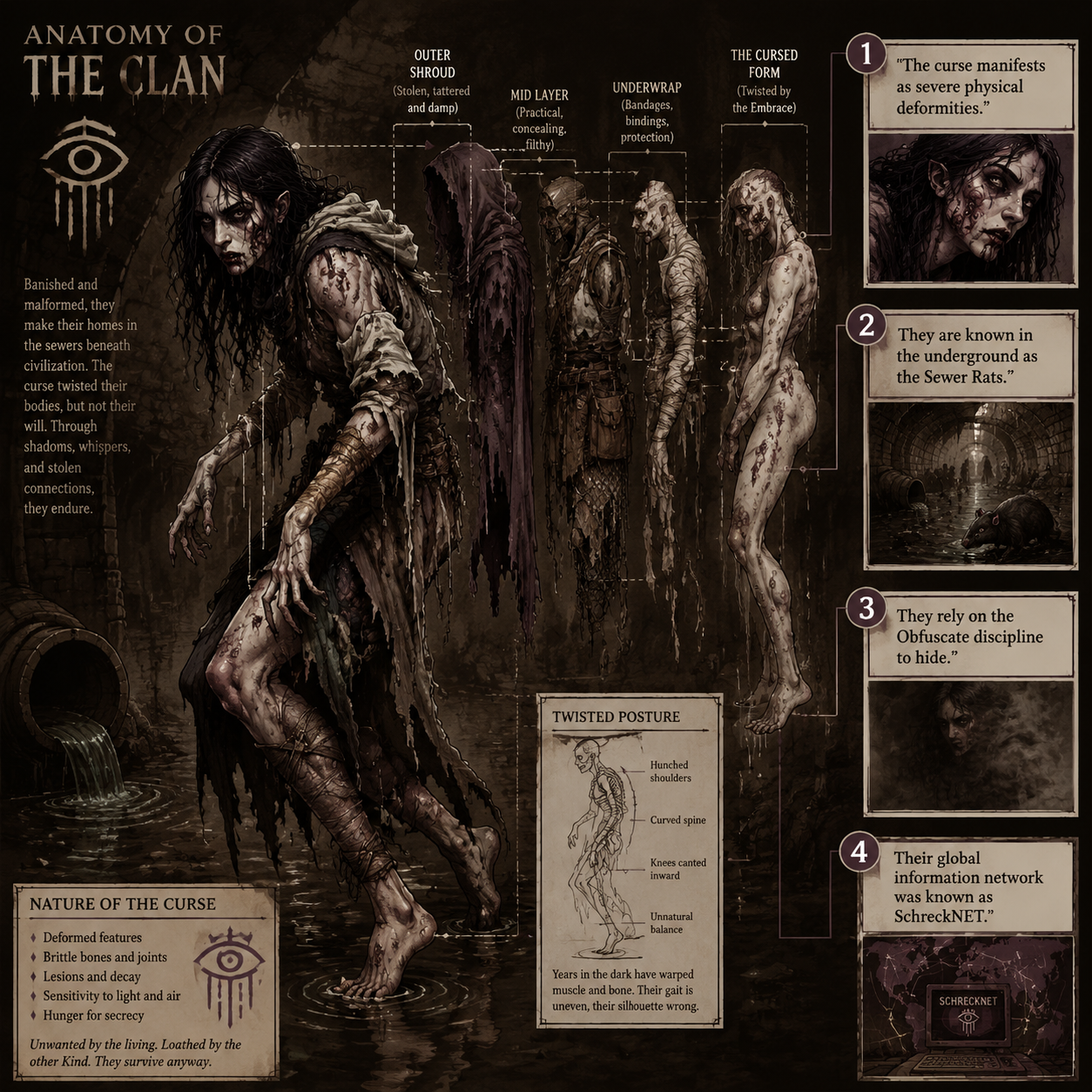
Female Nosferatu are just as common as males in VTM, and their existence is a fascinating exploration of survival. To navigate the world, they rely on the Obfuscate discipline to hide, a magical ability that clouds the minds of onlookers, making the vampire appear invisible or disguised as a normal human. From the shadows of the sewers, these women operate as master spies, hackers, and information brokers. Until its recent destruction by human hunters during the Second Inquisition, their global information network was known as SchreckNET, a dark-web database cheekily named in honor of Max Schreck, the original 1922 Orlok actor.
The Tragedy of Belinde Buch
One of the most fascinating examples of a female Nosferatu in VTM lore is the tragic case of Belinde Buch, which proves that the clan's curse has a sick sense of irony. The Nosferatu bloodline is notoriously cruel, often deliberately targeting the vain, the superficial, or the exceptionally beautiful to teach them a horrific, eternal lesson in humility.
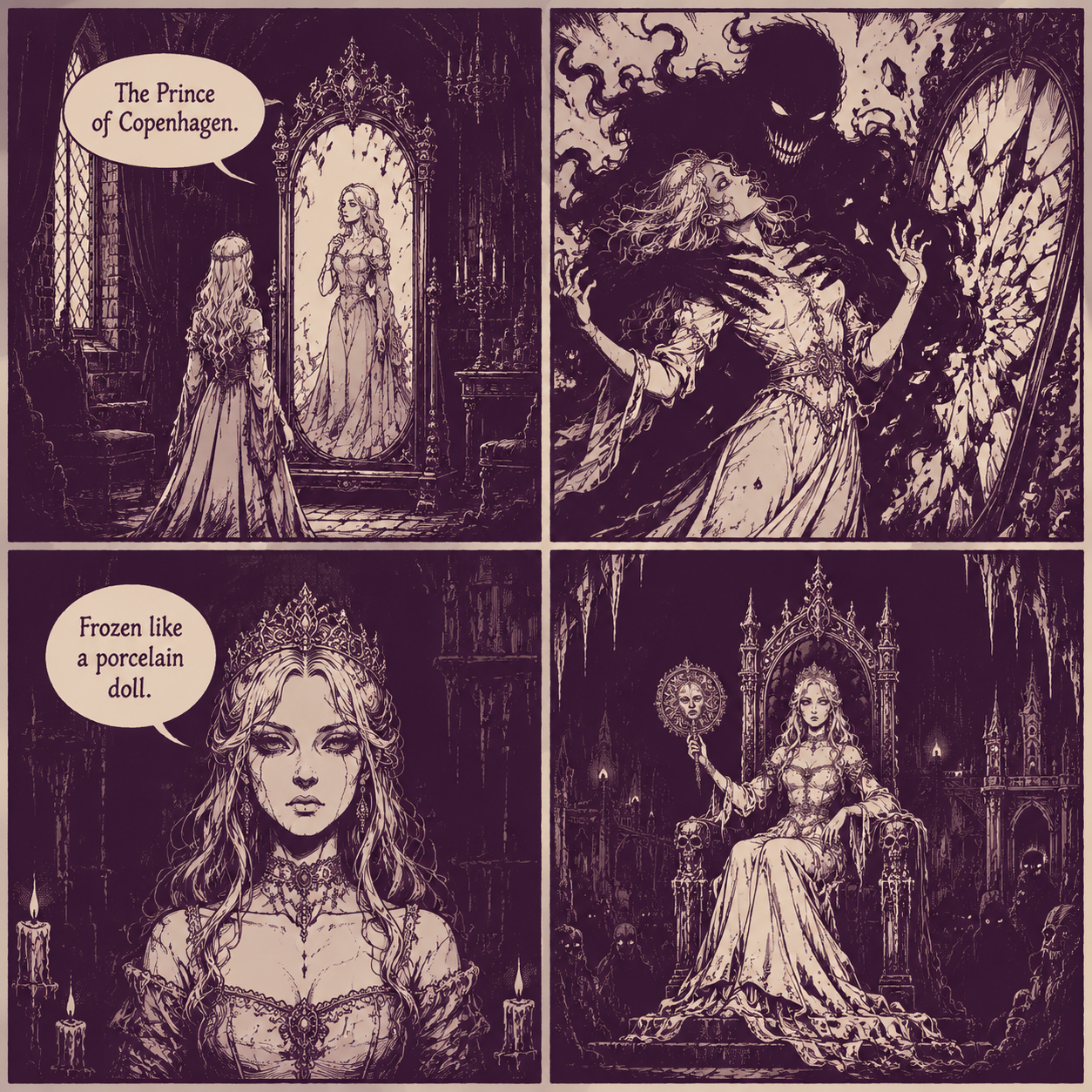
In life, Belinde was a woman of extraordinary beauty. When she was embraced into the Nosferatu clan, her curse did not manifest as rotting flesh, tumors, or rodent-like features. Instead, her skin smoothed to an unnatural, plastic perfection, and her facial muscles paralyzed entirely. She became The Prince of Copenhagen, ruling her icy domain while trapped in a visage frozen like a porcelain doll. She cannot blink, her eyes remain fixed in a dead stare, and her lips cannot move; she requires a specialized disc in her mouth just to speak coherently to her subjects.
This interpretation of the female Nosferatu is deeply unsettling. It subverts the traditional "ugly" monster by making perfection itself grotesque. Belinde's story highlights how the Nosferatu archetype isn't just about looking like a bat or a rat—it is about the profound loss of humanity and the terrifying isolation that comes with being fundamentally alien.
Reclaiming the Grotesque Female Vampire
Why does the concept of a female Nosferatu resonate so strongly with modern audiences? For decades, the horror genre has heavily leaned on the "sexy vampire" trope for its female antagonists. From Salma Hayek in From Dusk Till Dawn to Aaliyah in Queen of the Damned, female vampires are typically designed to be alluring, their danger masked by conventional, male-gaze-approved attractiveness. Society forces women to be aesthetically pleasing, and vampire media has historically doubled down on this mandate, ensuring that even female monsters remain beautiful.
The female Nosferatu shatters this expectation. Whether it is Ellen Hutter’s psychological degradation and rejection of polite Victorian society in the 2024 film, or the physically deformed Sewer Rats of tabletop lore, this archetype allows female characters to be genuinely, unapologetically terrifying. They are not objects of desire; they are avatars of plague, tragedy, and ancient dread. They do not seduce; they consume.
By asking if there is a female Nosferatu, audiences are expressing a desire for parity in horror. We want our female monsters to be just as ugly, just as pestilent, and just as deeply complex as Count Orlok himself. We want the freedom of the grotesque.
Closing Take
The legacy of the Nosferatu is one of shadows, sickness, and ultimate sacrifice. While Robert Eggers’ 2024 cinematic masterpiece didn't give us a female Orlok in the literal, rat-fanged sense, it gave us Ellen Hutter—a woman whose soul became indistinguishable from the monster she summoned. Meanwhile, decades of rich RPG lore have already proven that the grotesque curse of the undead does not discriminate by gender. The female Nosferatu is real, she is terrifying, and she is waiting patiently in the dark.
Sources
- Eggers, R. (Director). (2024). Nosferatu. Focus Features.
- Stoker, B. (1897). Dracula. Archibald Constable and Company.
- Murnau, F.W. (Director). (1922). Nosferatu: A Symphony of Horror. Prana Film.
- White Wolf Publishing. Vampire: The Masquerade Core Rulebooks (various editions).