Sinners (2025): Who Is Remmick and Why Are the Vampires Irish? | BgRemovit
·9 min read·visibility0 views
Sinners (2025): Who Is Remmick and Why Are the Vampires Irish?
Ryan Coogler’s 2025 horror Sinners introduces Remmick, an ancient Irish vampire. Discover his origins, lore, and the dark historical meaning behind the film.
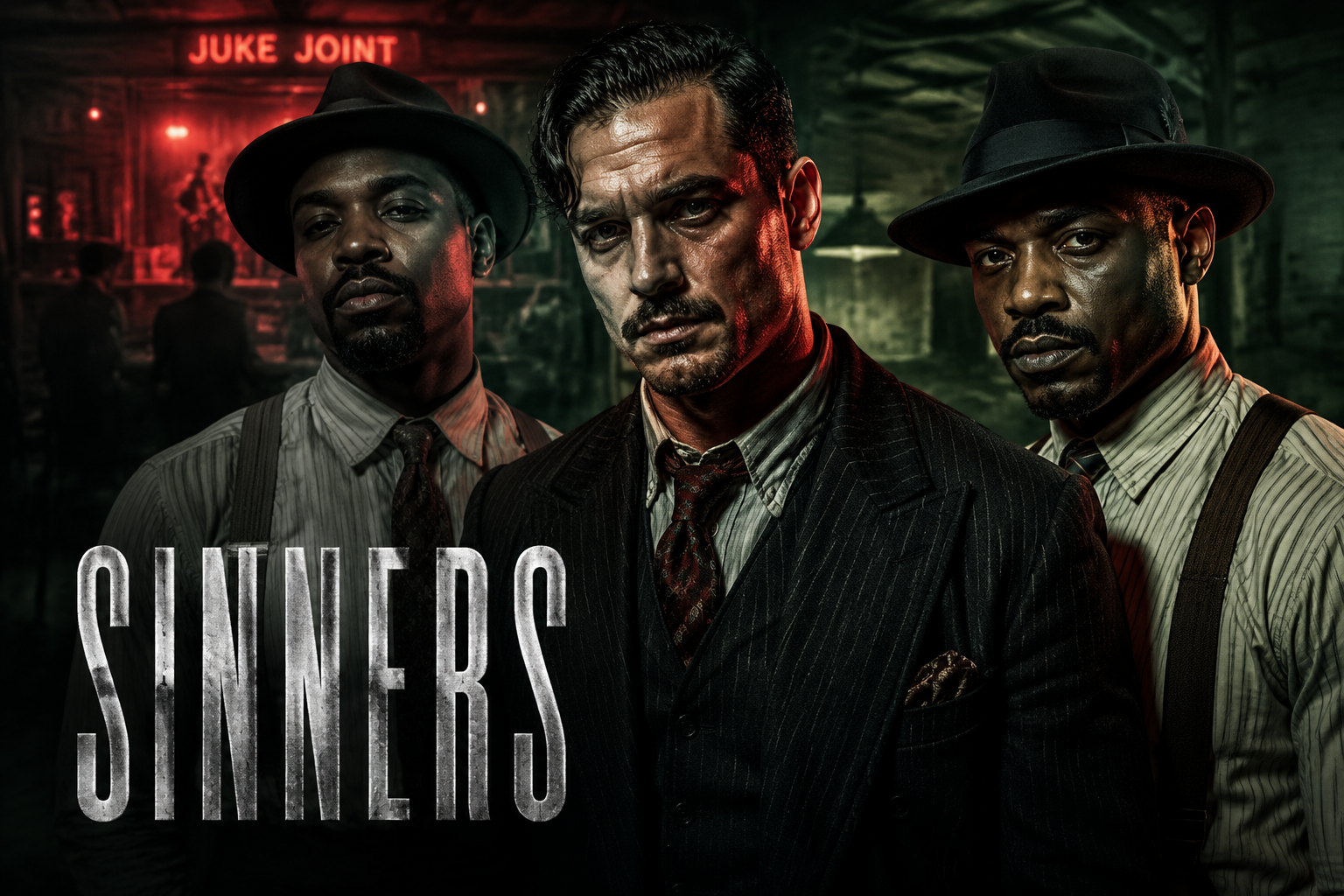
Ryan Coogler’s 2025 Southern Gothic horror Sinners did not just revitalize the vampire genre; it fundamentally rewired its historical DNA. Set in the sweltering, oppressive atmosphere of the 1932 Mississippi Delta, the film follows twin brothers Smoke and Stack (both played with magnetic intensity by Michael B. Jordan) as they attempt to leave their Chicago gangster pasts behind by opening a rural juke joint. The cinematography by Autumn Durald Arkapaw renders the Jim Crow South not merely as a backdrop, but as a suffocating, inescapable character of its own, while Ludwig Göransson’s score pulses with dread.
But the true gravitational center of the film is its villain: Remmick, portrayed with chilling sincerity by Jack O’Connell. Viewers walking out of the theater—or pausing the credits to process the dense, layered ending—are left with a burning question: Why are the vampires in a 1930s Jim Crow South narrative singing traditional Irish folk songs? The answer lies in a masterful blend of historical allegory, ancient lore, and the unifying, supernatural power of music. Coogler has crafted a monster who weaponizes empathy, turning the shared trauma of marginalized people into a trap.
The Ancient Origin of Remmick
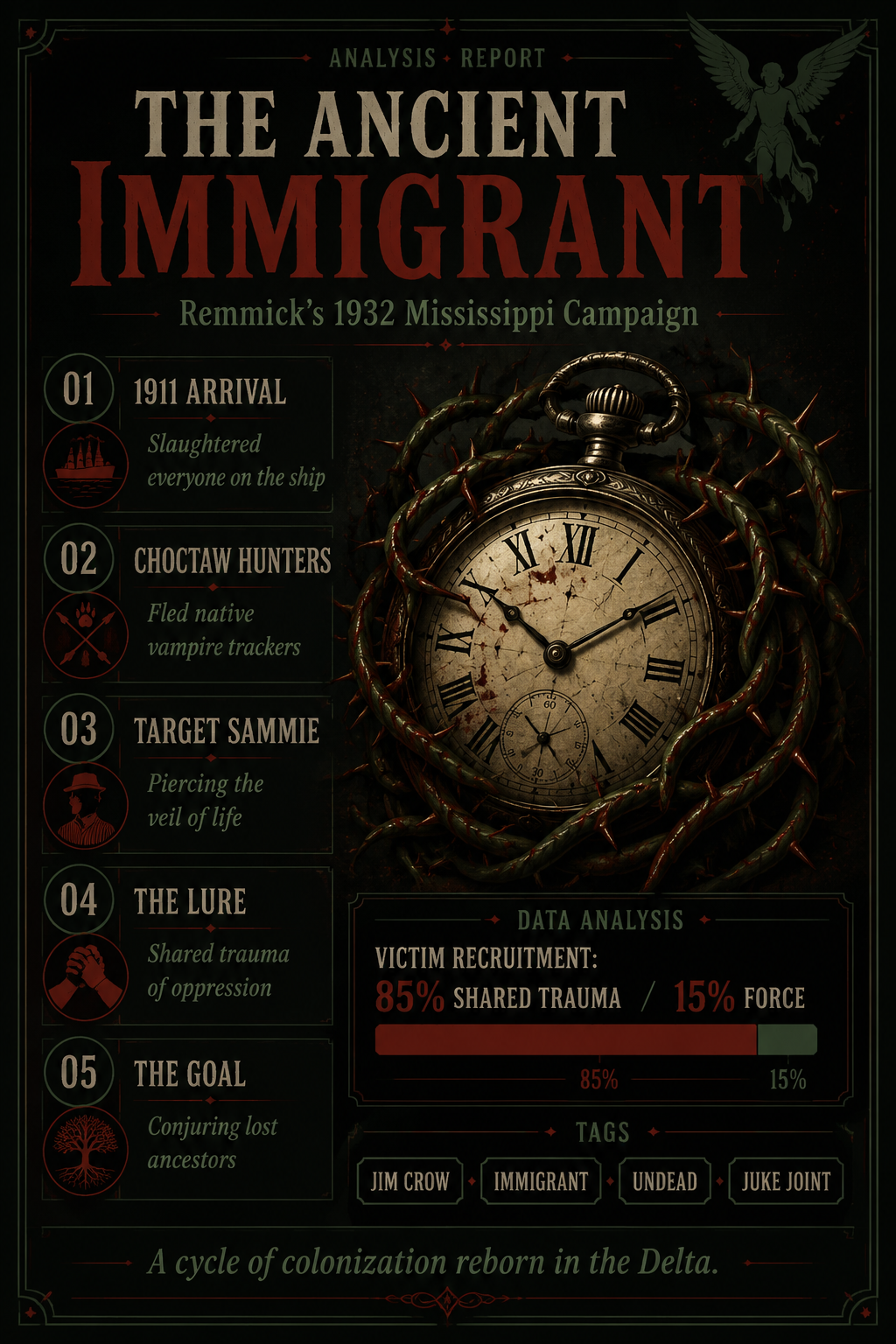
To understand Remmick, you have to look past the fangs. He is not a newly turned creature of the night native to the Mississippi Delta, nor is he a standard Victorian aristocrat brooding in a gothic castle. Remmick is a centuries-old Irish immigrant vampire. According to subtle lore drops in the film and hidden Easter eggs embedded in the official Spotify soundtrack, his arrival in America was bathed in blood and desperation.
In 1911, Remmick crossed the Atlantic on a ship carrying Irish immigrants. Mirroring the doomed voyage of the Demeter in Bram Stoker’s Dracula, Remmick slaughtered everyone on board before vanishing into the American night. His early decades in the United States were not spent building a glamorous empire, but merely surviving on the fringes. The lore reveals he eventually ran afoul of Choctaw Native American vampire hunters, a brutal conflict that left him physically scarred and forced him deeper into the shadows of the deep South.
Physiologically, Remmick is distinct from the modern vampires he creates. As an ancient bloodline, he possesses elongated claws, glowing eyes, the ability to fly, and the power to vanish into flame tornadoes—traits his newly turned victims lack. By the time he encounters Smoke, Stack, and their musically gifted cousin Sammie Moore in 1932, Remmick is driven by profound, agonizing loneliness. He is an ancient being who has lost his homeland, his people, and his culture. His motivation is not mindless feeding; it is the desperate desire to rebuild a surrogate family out of the ashes of his isolation.
Why Are the Vampires Irish?
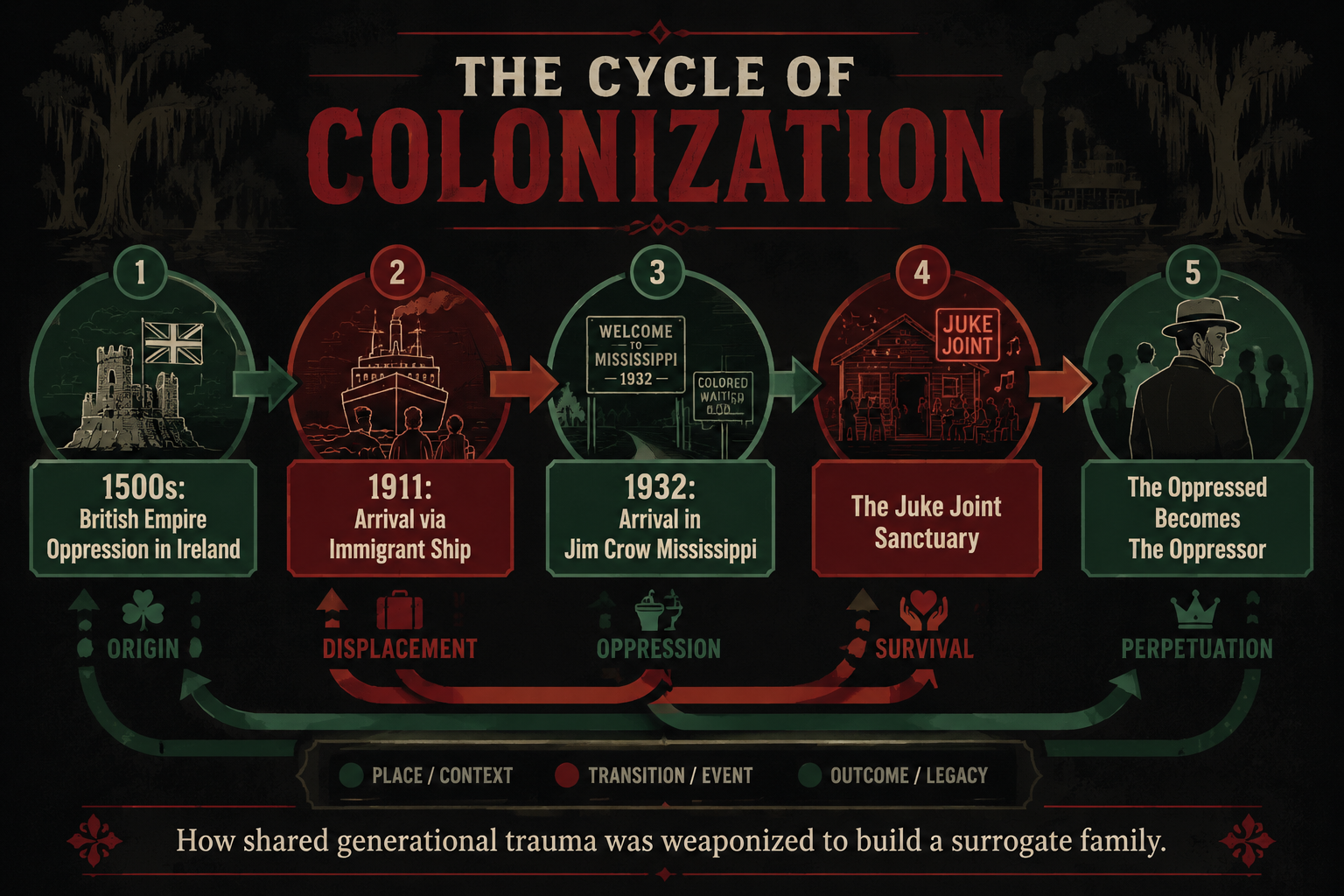
The decision to make Remmick and his undead lineage Irish is Coogler’s sharpest thematic weapon. On the surface, placing a white European vampire in the Jim Crow South looks like a straightforward, albeit striking, metaphor for white supremacy preying on a Black community. But Coogler’s script digs much deeper into the mechanics of historical trauma, drawing a brilliant parallel between two distinct histories of subjugation.
Remmick’s people were brutally oppressed by the British Empire. In ancient Ireland, his ancestors had their land seized, their culture suppressed, their language erased, and their religion violently overwritten. When Remmick looks at the Black sharecroppers of 1932 Mississippi, he does not see mere prey—he sees a mirror. He recognizes the systemic violence, the economic disenfranchisement, and the cultural erasure. He genuinely believes he understands their plight.
This shared generational trauma becomes his ultimate recruitment tool. Remmick doesn't just bite people in dark alleys; he preaches to them. He offers the marginalized citizens of Clarksdale an escape from a world that has already left them for dead. Vampirism, in Remmick’s eyes, is a radical form of emancipation. He promises a fellowship where no white man can dictate their lives, offering immortality as the ultimate defiance against Jim Crow oppression. It is a terrifyingly seductive pitch because it is rooted in a twisted, genuine empathy.
The Power of the Blues and Piercing the Veil
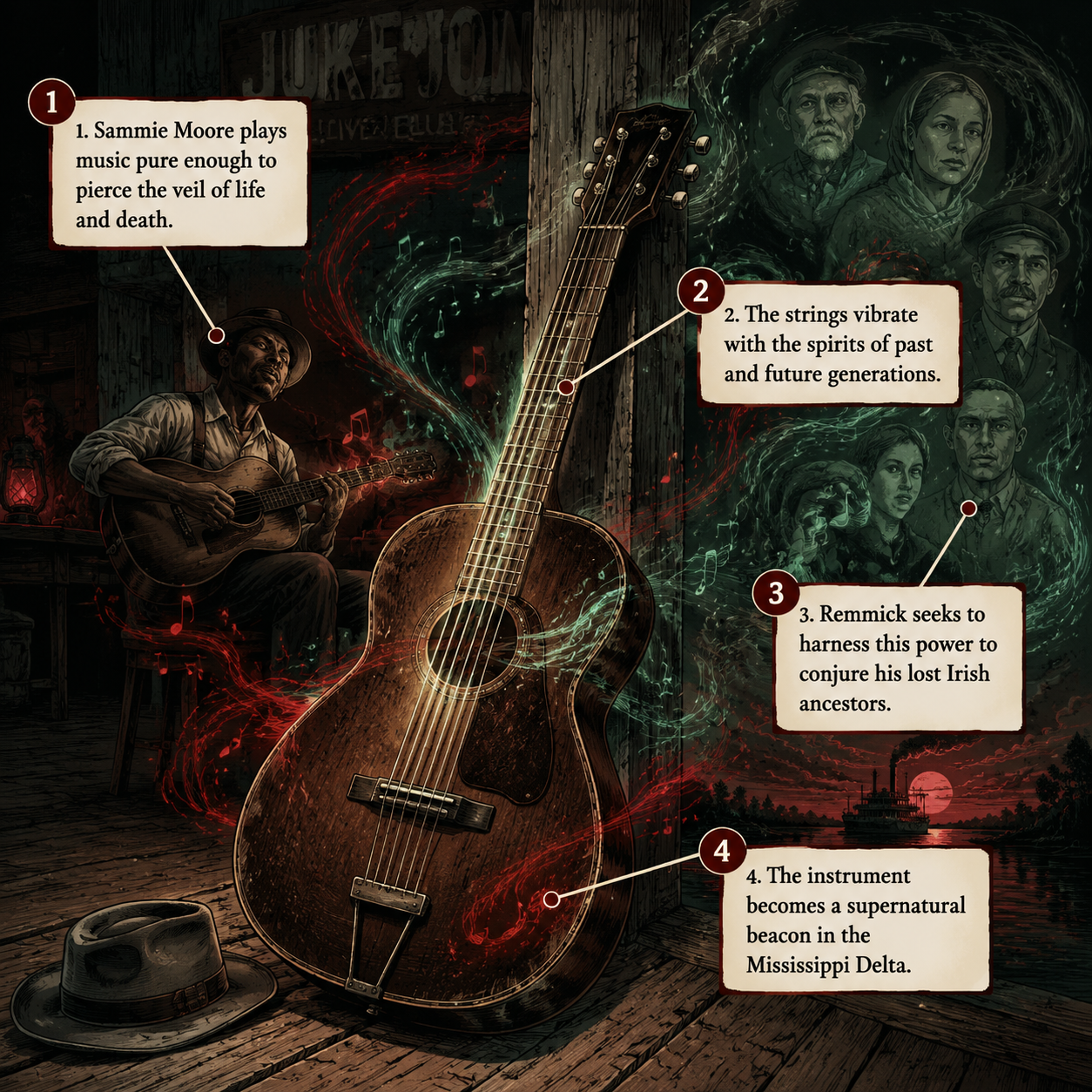
If shared trauma is the psychological hook Remmick uses to build his ranks, music is the supernatural binding agent that draws him to Clarksdale in the first place. The film’s opening narration establishes a crucial piece of world-building: certain musicians possess a gift so pure it can pierce the veil between life and death, conjuring spirits from the past and future. In ancient Ireland, these musical conduits were called Filí; in West Africa, Griots. In 1932 Mississippi, that conduit is Sammie Moore.
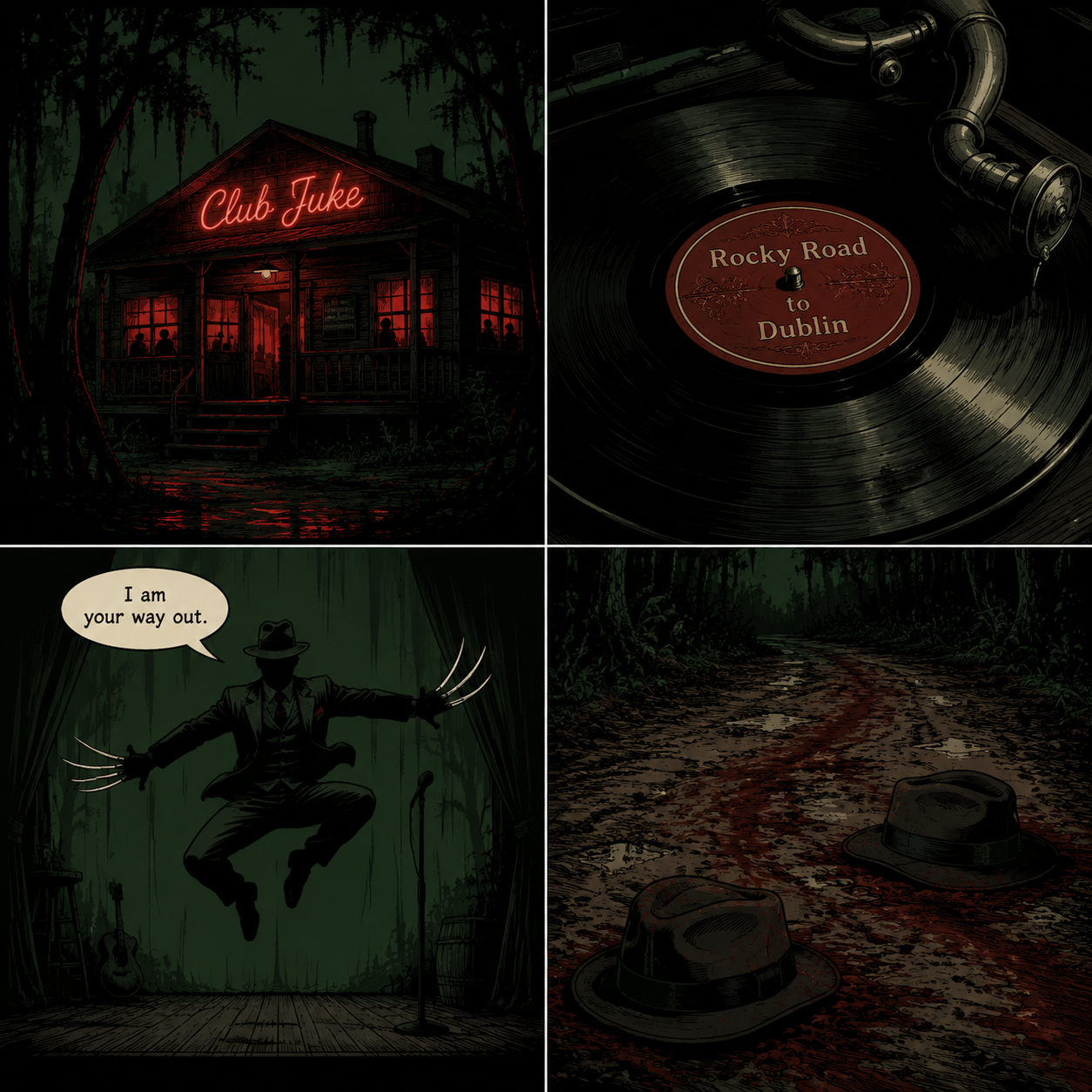
Sammie, a young sharecropper and pastor’s son, plays an acoustic blues guitar with a transcendent, raw power. In the 1930s, the blues was often demonized by conservative religious figures as "the devil's music," a stigma Sammie faces from his own father. Yet, when Smoke and Stack build their sanctuary—Club Juke—they inadvertently create a beacon for the supernatural. During a breathtaking sequence where Sammie plays "I Lied to You," the spirits of Black musical history materialize in the juke joint, proving his status as a living bridge to the afterlife.
Remmick does not just want to drain Sammie; he wants to harness him. The ancient vampire seeks to use Sammie’s veil-piercing music to conjure his own lost Irish ancestors. It is a haunting collision of cultures: the sacred legacy of Black blues music being co-opted to resurrect the ghosts of ancient Ireland. The acoustic blues guitar becomes a literal instrument of necromancy in the Mississippi Delta, bridging two vastly different worlds united by suffering.
The Tragic Irony of Colonization
The ultimate tragedy of Remmick is that in his desperate attempt to preserve his culture and save his new followers, he becomes the exact monster he once fled. He forces his victims to assimilate into his hive-mind, stripping away their individuality to serve his vision of a surrogate family. The oppressed, given ultimate power, simply reinvents the wheel of colonization.
This cultural erasure is most vividly depicted in the film's unforgettable, surreal dance sequence. After turning several patrons of Club Juke, Remmick leads his new undead cadres in a rollicking, terrifying rendition of the traditional folk song "The Rocky Road to Dublin." Seeing Black sharecroppers in the Jim Crow South, stripped of their southern drawls and perfectly executing Irish step dancing while singing about traveling from Tuam to Liverpool, is a jarring, brilliant visual. It represents the ultimate cultural consumption. Remmick's pitch—"I am your way out"—is revealed to be a poisoned chalice. He saves them from Jim Crow only to colonize their souls, acting as a parasite that hollows out their heritage to make room for his own.
Ultimately, Sinners uses vampirism as a devastating metaphor for assimilation and the commodification of culture. Remmick is defeated by Smoke as the sun rises, but the thematic scars linger long after the credits roll. For viewers eager to dissect how other recent thrillers handle the survival of the marginalized, you can explore more endings explained across the genre. Coogler’s vampires don't just take your blood; they take your history.
A New Standard for Horror
Sinners elevates the creature feature into a profound historical essay. By making Remmick an ancient Irish immigrant, Ryan Coogler forces the audience to grapple with how oppression can be passed down and replicated by its own victims. Remmick is a villain who thinks he is a savior, armed with a terrifying empathy that makes him one of the most compelling horror antagonists of the decade. He is a reminder that evil rarely presents itself as a monster in the dark; sometimes, it comes offering a hand, a song, and a way out.
Sources
Sinners (2025) Official Fandom Wiki & Villains Wiki